
Wildlife and flora
Emblematic species of the tropical dry forest — and the chance to be part of their regeneration.
Wildlife · biodiversity of the tropical dry forest
At the reserve, visitors can observe and collaborate in the conservation of some of the most emblematic and threatened species of the tropical dry forest:
Parrots and macaws
Amazona ochrocephala (yellow-crowned amazon) · Ara macao (scarlet macaw) · Ara ararauna (blue-and-yellow macaw) · Forpus spengeli (Spengel's parrotlet).
Primates
Cotton-top tamarin (Saguinus oedipus) — critically endangered · red howler monkey (Alouatta seniculus) · white-faced capuchin (Cebus capucinus).
Mammals
Three-toed sloth (Bradypus variegatus) · oncilla (Leopardus tigrinus) · white-tailed deer (Odocoileus virginianus) · collared peccary (Pecari tajacu) · agouti (Dasyprocta fuliginosa) · paca (Cuniculus paca) · capybara (Hydrochoerus hydrochaeris) · armadillos · crab-eating raccoon (Procyon cancrivorus) · tayra (Eira barbara) · greater grison (Galictis vittata).
Reptiles
Spectacled caiman (Caiman crocodilus) · green iguana (Iguana iguana) · red-footed tortoise (Chelonoidis carbonaria) — a keystone species for soil regeneration and seed dispersal.
Birds
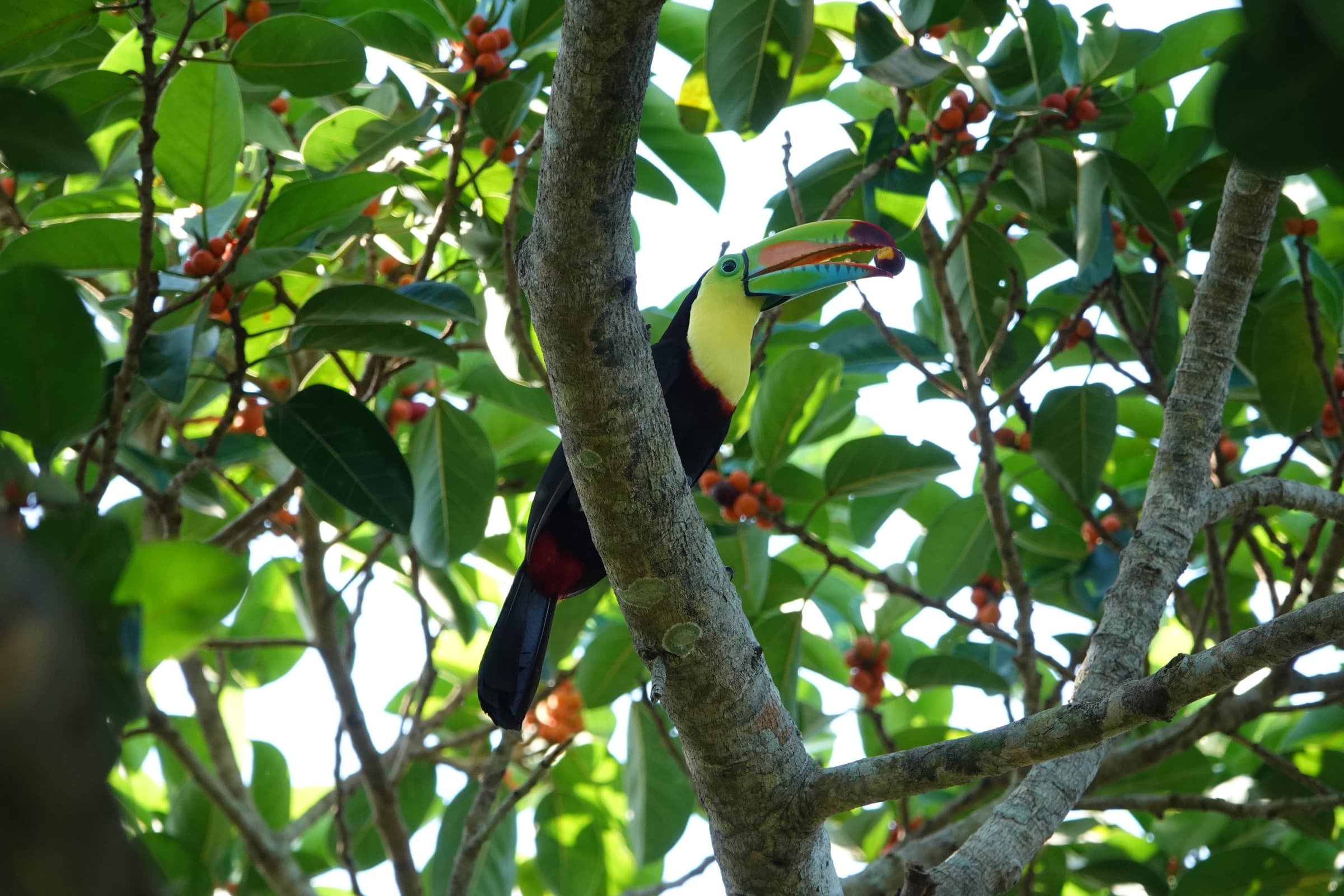
Keel-billed toucan (Ramphastos sulfuratus) · Chestnut-winged chachalaca (Ortalis garrula) · hawks and other raptors, plus migratory birds that spend part of the year in the territory.
Parrots and macaws are our umbrella species: by protecting them, we automatically protect mammals, herptiles and other birds of the tropical dry forest — including migratory species that stop in Colombia.
Active conservation
We invite visitors to take part directly in parrot rehabilitation and ecosystem restoration: monitoring released wildlife, supporting feeding stations, participatory tracking. Every visit is a chance to be part of regeneration.
Come see the wildlife in its habitat
Schedule a guided visit or a volunteer program to accompany the wildlife we rescue and release into the tropical dry forest.