
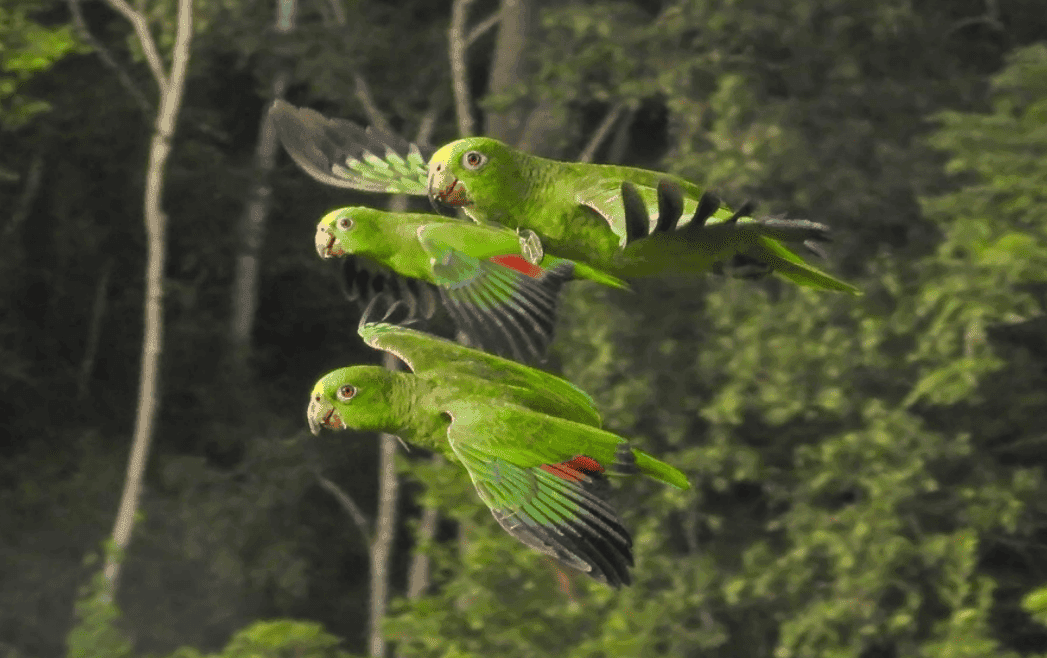
The reserve — the heart we protect.
520 hectares of tropical dry forest in Bolívar, one of the most biodiverse and most threatened regions in the Colombian Caribbean.
The soul of the project
A reserve is not a closed park, nor a wildlife museum. It is a living pact between the forest, its wildlife and a human community that chooses to care for it.
That is Los Loros.
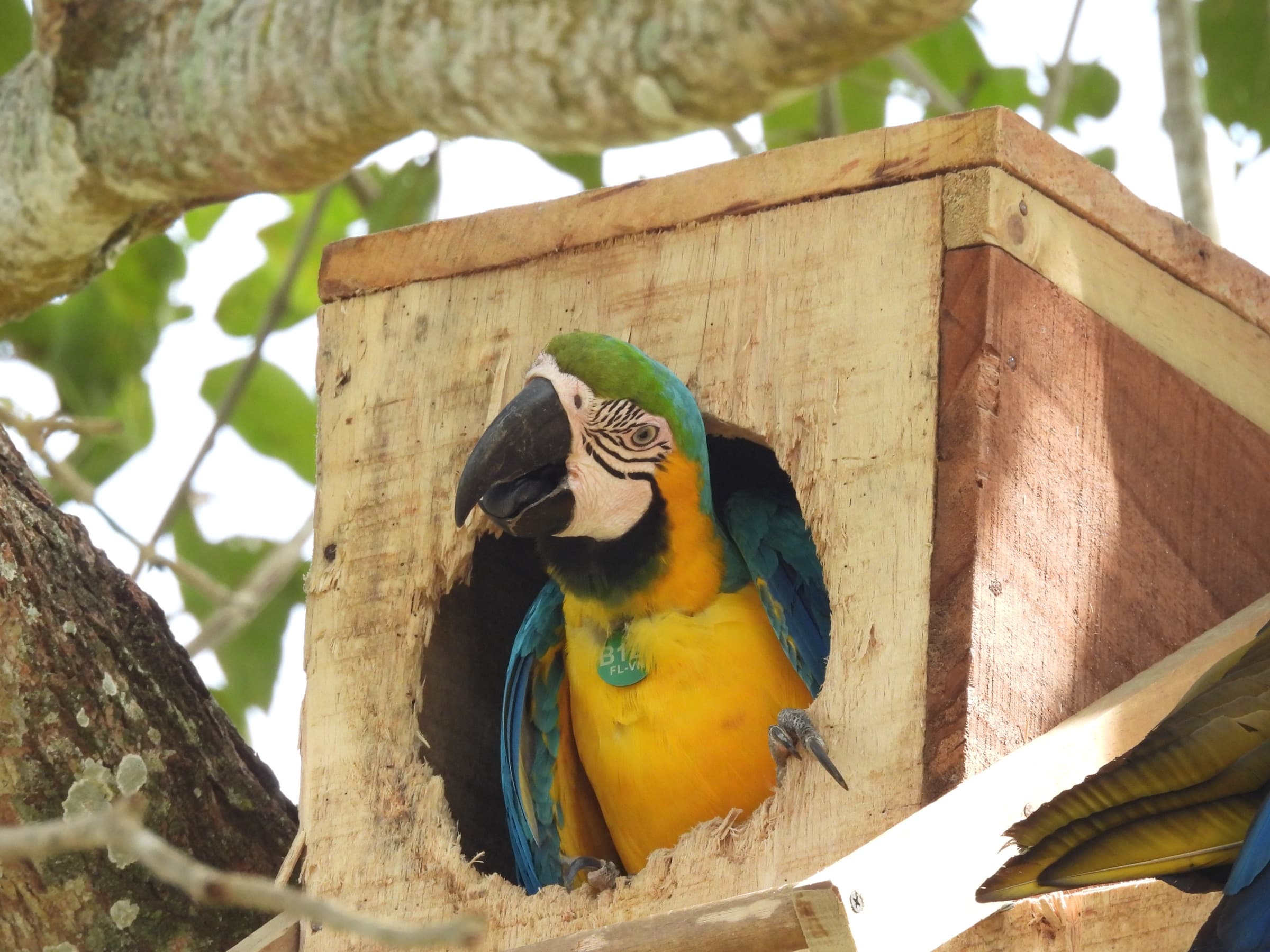
Tropical dry forest, alive and diverse
The tropical dry forest of the Colombian Caribbean is one of the most biodiverse ecosystems per hectare and, paradoxically, one of the least protected. At Los Loros you will find parrots and macaws rescued by Fundación Loros, primates like white-headed capuchins, a remarkable diversity of resident and migratory birds, reptiles, amphibians and native pollinators.
Protection model
Five concentric rings
Conservation at the center, production in the middle rings, visits and homes on the edges. Between them, uninterrupted ecological corridors.
01 · Core · preservation
Cerro El Peligro and mature forest zones: protected, never intervened. Zero extraction, zero construction. This is where parrots, macaws and primates nest, rest and feed.02 · Restoration · future conservation
Perimeter ring where we plant native species of the tropical dry forest and enrich waterway buffers and corridors. The most dynamic zone: over time, parts of it will mature enough to join the core.03 · Agroforestry
Crops associated with native fruit trees of the tropical dry forest: systems that feed both wildlife and Caribbean communities, without depending on monoculture.04 · Silvopastoral
Livestock compatible with scattered trees, living fences of matarratón and guásimo, and shaded zones. Production coexists with wildlife corridors while the landscape gains tree cover.05 · Regenerative tourism
Toward the edges, low-impact trails and experiences designed to regenerate — not just conserve. Every visit plants trees, monitors wildlife, and funds the operation of the inner rings.
How we protect the reserve
Four pillars of the model
Environmental awareness
Every visitor, owner and volunteer leaves understanding what the tropical dry forest is and why protecting it matters.Active regeneration
Native species planting, enrichment of corridors and waterway buffers, recovery of degraded soils.Citizen science
Participatory monitoring of wildlife and plants: owners and volunteers contribute to a continuous record of the ecosystem.Human-wildlife coexistence
The eco-villas do not fragment the forest; people live alongside wildlife without displacing it.
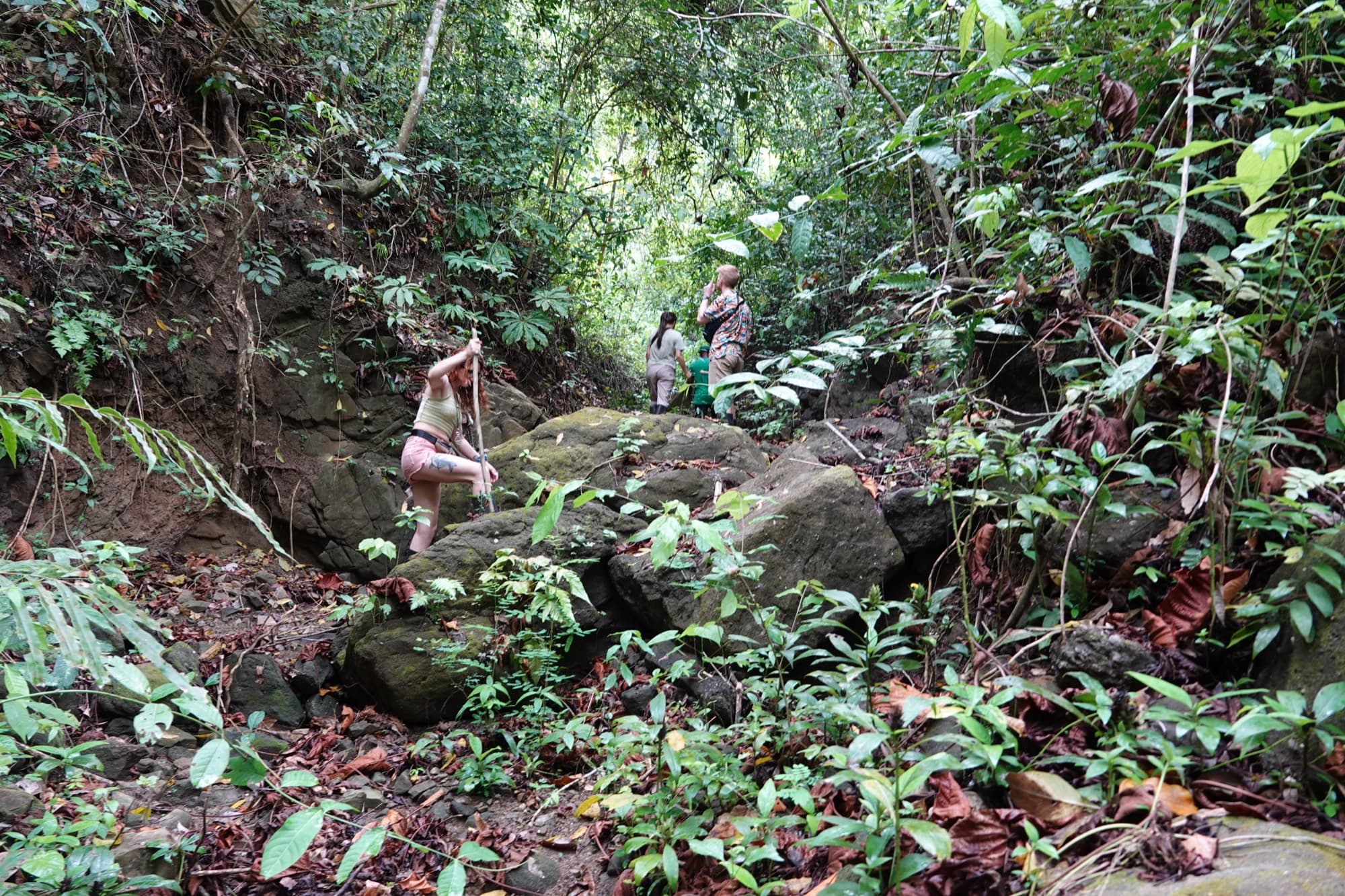
The community exists to protect the reserve
Living at Los Loros is not just buying a plot. It is taking on a role as a guardian of the forest. The community of owners actively takes part in planting days, wildlife monitoring, decisions about the reserve and follow-up on the wildlife released by Fundación Loros.
Access for owners and visitors
Five ways to live the reserve
Hiking
Low-impact walks along the perimeter rings of the reserve.Birdwatching
Observation points in strategic spots, with expert guides and documented migration seasons.Tree-planting days
Hands-on participation in regenerating the perimeter ring.Participatory monitoring
Learn to record species, camera-trap data, bird counts. Real citizen science.Volunteering with Fundación Loros
Structured programs to accompany the release and monitoring of rescued parrots, macaws and primates.
Here you do not come to own a piece of forest. You come to care for it.
That is the pact every owner makes when they join Los Loros.
Want to visit the reserve?
We invite you to a guided visit through the reserve. See the core, the rings and the protection model in person.